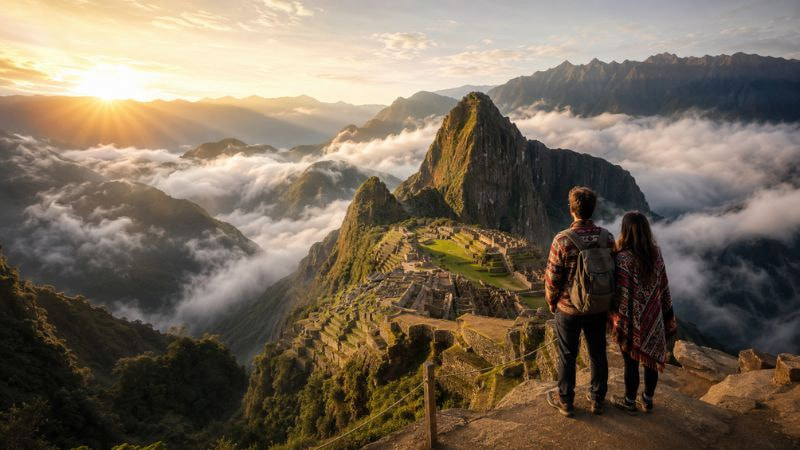
Peru is one of the most complete destinations in Latin America: thousand-year-old history, extreme nature, world-class cuisine, and a cultural diversity that few regions on the planet can match. But that very richness is what makes it a trip that demands planning. Without a clear structure, it’s easy to arrive without tickets for Machu Picchu, without time to acclimatize to the altitude, or with an itinerary that tries to cover too much and ends up enjoying too little.
This guide explains how to organize a trip to Peru from scratch: what to decide first, how many days you need, what to book in advance, and what mistakes to avoid.
What to consider before organizing a trip to Peru?
Every good trip to Peru starts by answering these six questions before opening any flight search engine. Not because the process is complicated, but because each decision depends on the one before it: dates define the weather, the weather defines the destinations, the destinations define the days, and the days define the budget.
- Dates and time of year: The season determines which destinations are accessible, the weather, and prices. For the Lima–Cusco–Machu Picchu route, the dry season (May to October) is the ideal window. You can find more information in our guide on the best time to travel to Peru.
- Trip duration: The minimum recommended for a first visit is 10 days. With less time, acclimatization or experiences are compromised.
- Budget: Set a daily range before choosing accommodation or tours. Peru has options starting from 40 USD per day up to premium experiences of 400 USD or more.
- Priority destinations: Wanting to cover Lima, Cusco, Machu Picchu, Arequipa, and Lake Titicaca in 10 days results in an itinerary of transfers, not experiences. Decide what’s non-negotiable before planning.
- Physical condition and altitude: Cusco sits at 3,399 m.a.s.l. Acclimatization isn’t optional: skipping it ruins the first days of the trip.
- Type of experience you’re looking for: Decide whether you’re after culture, adventure, nature, gastronomy, or slow travel. That shapes every itinerary decision.
This table summarizes the key variables and what we recommend in each case, based on our experience organizing trips to Peru.
| Variable | Main options | Recommendation |
| Season | Dry (May–Oct) / Rainy (Nov–Apr) | Dry season for Cusco and Machu Picchu |
| Duration | 4, 5, 7, 12+ days | Minimum 10 days for a first visit |
| Budget | From 489 USD (4D package) up to premium trips | Depending on profile and chosen destinations |
| Altitude | Cusco 3,399 m / Machu Picchu 2,430 m | Minimum 2 days of acclimatization in Cusco |
| Destinations | Lima, Cusco, Sacred Valley, Machu Picchu, Jungle, Paracas, Huacachina, Puno, Arequipa | Don’t try to cover everything in a single trip |
Recommended itinerary for visiting Peru for the first time
When someone writes to us to organize their first trip, they almost always come with the same destinations: Machu Picchu, Cusco, Lima. Sometimes they add Arequipa, Lake Titicaca, or the Amazon. And they almost always have fewer days than they need.
The first thing we do is help them prioritize. Peru isn’t a destination you tour, it’s a destination you inhabit, even if only for a few days. Wanting to see it all in a short time is the surest way not to enjoy it as it deserves.
The itinerary we recommend for a first visit is Lima, Cusco, the Sacred Valley, and Machu Picchu. It has geographic logic, allows for gradual acclimatization, and concentrates the best of the country without turning the trip into a list of transfers. With 7 to 10 days it can be done well. With less, the first thing to go is acclimatization, which is exactly what shouldn’t go.
Lima: much more than a stopover
Many travelers think Lima is just a stopover. They arrive, sleep, and head off to the Cusco tour the next day. It’s a mistake we see very often.
The Lima tour is surprising. It has one of the most interesting food scenes in the world, neighborhoods with their own personality, and museums that put into context everything you’ll see later in the highlands. Spending two full days there isn’t wasted time, it’s the best way to arrive in Cusco rested and with your pace calibrated.
Our recommendation is to stay in Miraflores: safe, well connected, and with the widest range of dining options in the city. Barranco is ten minutes away and the historic center thirty minutes.
What you shouldn’t miss:
- Historic Center of Lima: one of the best-preserved colonial centers in South America. The Plaza Mayor, the Convent of San Francisco with its catacombs, and the Government Palace are worth a relaxed half-day visit
- Miraflores and Barranco: the coastal boardwalk overlooking the Pacific, the republican-era architecture, and the bohemian energy of Barranco, the artists’ neighborhood with the city’s best nightlife
- Huaca Pucllana: pre-Inca ruins right in a residential district that surprise everyone. Night visits with the huaca lit up are an experience in their own right
- Larco Herrera Museum: if you want to understand the Inca and pre-Inca world before reaching Cusco, this museum is the place. The collection is impressive, and so is the building
- Gastronomy: from a street food tour through the historic center to a daytime gourmet experience or a nighttime food tour with ocean views. Lima has something for every profile and budget
- Full Day Huacachina and Paracas: What few people know is that, just 4 hours from Lima, you’ll find the Ica desert and the Huacachina oasis, a landscape that looks like it’s from another continent. On a one-day tour you can ride across the impressive dunes in dune buggies, try sandboarding, and visit the Ballestas Islands or the Paracas National Reserve, two of the main natural attractions on the Peruvian coast.
If you have an extra day in Lima, you can also swim with sea lions at Palomino Island or fly on a paratrike over the Costa Verde. Two experiences that very few travelers know about and none forget.
From Jorge Chávez Airport to Miraflores it’s about a 50-minute drive. Avoid informal taxis outside the airport.
| Lima at a glance | |
| Recommended days | 2 |
| Ideal base | Miraflores |
| Transfer from airport | ~50 min |
| Don’t miss | Historic Center, Larco Herrera Museum, Huaca Pucllana, Barranco, local gastronomy, Full-day tour to Huacachina and Paracas |
| Available tours | See all tours in Lima |
Cusco and the Sacred Valley: culture, history, and Andean landscapes
Cusco was the capital of Tawantinsuyo (the Inca Empire), and today it lives alongside that past on every street. Inca stones support colonial walls, markets blend Quechua with Spanish, and the hills surrounding the city are dotted with archaeological sites that few tourists get to know.
But before talking about what you’ll see, we need to talk about altitude.
Cusco sits at 3,399 meters above sea level and altitude sickness gives no warning. It doesn’t matter your physical condition or whether you’ve been to high places before. The first day is for rest, plenty of water, coca tea, no alcohol, and no intense activity. On the second day you can move around calmly. By the third, your body is usually ready.
Those who respect this process enjoy the rest of the trip. Those who ignore it end up paying for it.
Once acclimatized, Cusco has a lot to offer: the Plaza de Armas and its cathedral, the Qorikancha (the Temple of the Sun, the most sacred building of the Inca Empire), the San Blas neighborhood with its craft workshops, and the archaeological sites on the outskirts such as Sacsayhuamán, Qenqo, Tambomachay, and Puca Pucara.
The Sacred Valley deserves at least one full day or two. It’s the corridor between Cusco and Machu Picchu along the Urubamba River, and it concentrates some of the country’s most important archaeological sites. Our recommendation is to explore it on the Sacred Valley tour: the sites are spread out and a local guide will tell you what no photo can explain.
The Sacred Valley isn’t a single site, it’s a corridor of towns and ruins stretching along the Urubamba River, and each stop has its own character. Here’s a summary of the main attractions:
| Site | Distance from Cusco | What to see |
| Pisac | 33 km | Craft market, Pisac ruins |
| Ollantaytambo | 97 km | Best-preserved Inca fortress; departure point for the train to Aguas Calientes |
| Chinchero | 28 km | Traditional textiles, Chinchero Archaeological Center |
| Moray | 50 km | Circular terraces of Inca agricultural experimentation |
| Maras | 40 km | Salt pans in use since pre-Inca times |
| Cusco and the Sacred Valley at a glance | |
| Recommended days | 2-4 including the Sacred Valley |
| Cusco altitude | 3,399 m.a.s.l. |
| Acclimatization | 2 days minimum before intense activity |
| Don’t miss | Qorikancha, Sacsayhuamán, Ollantaytambo, Pisac |
| Available tours | See tours in Cusco |
Machu Picchu: the trip’s unmissable highlight
There are places that meet expectations and places that exceed them. Machu Picchu is in the second category, which is hard to achieve when you’ve spent years looking at photos of one of the wonders of the world.
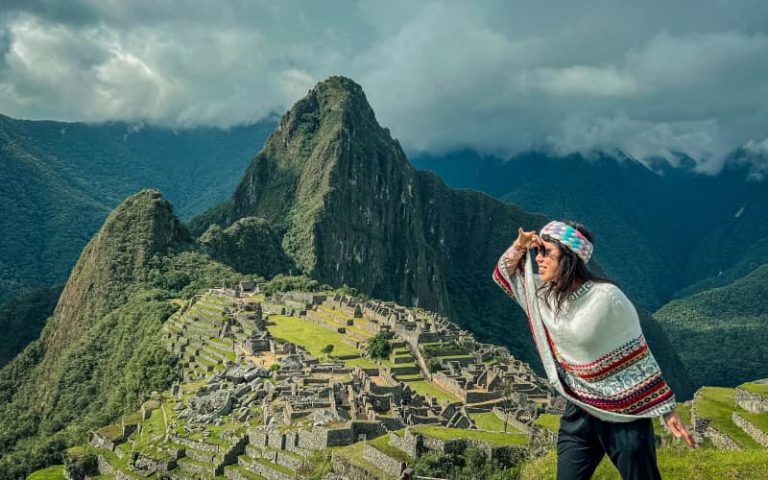
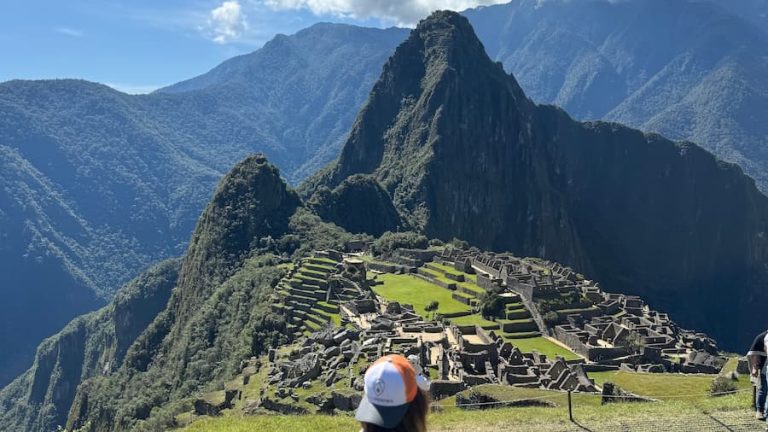
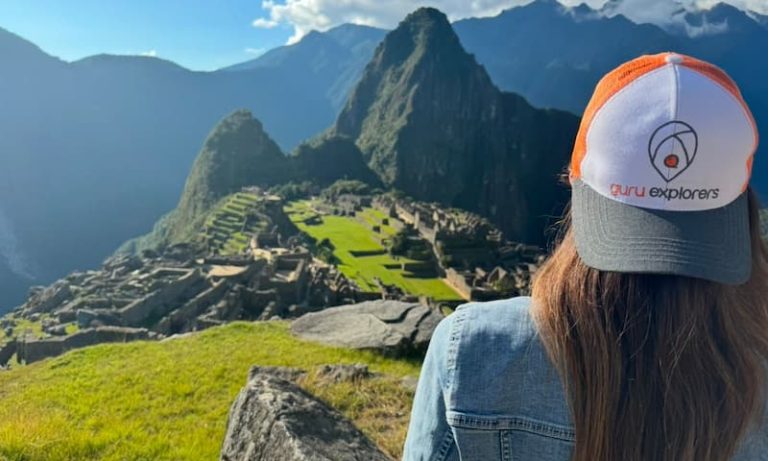
The citadel is built on a mountain ridge at 2,430 meters, surrounded by peaks and by clouds that wrap around it every morning. The first time you see it from the entry point, the effect is immediate.
What does require preparation is the logistics. Machu Picchu tickets have a limited daily quota and sell out months in advance during high season. The safest way to guarantee your entry is to book with a certified agency like Guru Explorers, where we manage the reservation along with the rest of the trip logistics. This is the point where most travelers go wrong, arriving in Cusco with nothing booked and finding everything sold out.
The only way to get there is by train to Aguas Calientes and from there by bus or on foot. Our recommendation is to book the morning slot because the mist that covers the ruins at sunrise is one of the trip’s most memorable images. You can see all the options in our Machu Picchu tours.
Before booking, here are a few key details worth knowing so you don’t get any surprises:
| Detail | Information |
| Daily quota | ~4,500 people spread across time slots |
| Time slots | Morning (6:00 AM–12:00 PM) / Afternoon (12:00–5:30 PM) |
| Recommended advance booking | 3–6 months during high season (Jun–Aug) |
| Train from Ollantaytambo | 1h45, |
| Train from Cusco | ~3h30, |
| Bus Aguas Calientes–citadel | ~25 min, |
| Huayna Picchu / Machu Picchu Mountain | ~400 spots/day; book 6+ months in advance |
If you want to explore more, here are the best excursions from Cusco
Cusco is much more than the gateway to Machu Picchu. If you have extra days, the region has landscapes and experiences that very few people forget.
The Humantay Lake is our first recommendation for those with only a few days of acclimatizing. It sits at 4,200 meters and the hike up takes about two hours from Mollepata. The reward is a turquoise glacial lake that looks unreal. Demanding but accessible, with an effort-to-reward ratio that’s hard to beat.
The Rainbow Mountain (Vinicunca) sits at 5,200 meters and its colored mineral stripes have to be seen to be believed. It requires acclimatization: at least two or three days in Cusco beforehand. Departure is around 4:30 in the morning and it’s worth every minute of lost sleep.
For those with more time and good physical condition, the Classic Inca Trail is the continent’s most iconic trekking experience: four days and three nights walking 43 kilometers along the original Inca route to reach Machu Picchu through the Sun Gate at sunrise. Spots sell out up to a year in advance and it can only be done with a licensed agency.
If you can’t get a spot on the Inca Trail, the Salkantay Trek is the strongest alternative: five days crossing Humantay Lake and the Salkantay pass at 4,600 meters before descending to Machu Picchu.
To help you choose based on your time, physical condition, and level of planning, here are the four options compared:
| Excursion | Altitude | Duration | Physical level | Advance booking |
| Humantay Lake | 4,200 m | 1 day | Moderate | Not required |
| Rainbow Mountain | 5,200 m | 1 day | Moderate-high | Not required |
| Inca Trail | up to 4,215 m | 4 days / 3 nights | High | 5–12 months |
| Salkantay Trek | up to 4,600 m | 5 days / 4 nights | High | 3–4 months |
How many days do you need to travel to Peru?
7 days is the minimum to properly complete the Lima–Cusco–Sacred Valley–Machu Picchu route without sacrificing acclimatization or feeling like the trip is a race.
With 7 days it’s doable, but you won’t fully enjoy it. And rushing in a country with altitudes of 3,400 meters has real physical consequences. The travelers who enjoy it most aren’t the ones who cover the most destinations, but those who arrive at each place with enough time to be present. A day at Machu Picchu rushing to catch the return train isn’t the same as two days with a free morning.
If you don’t know where to start, our tour packages are a good reference. The Classic Cusco 4D/3N is ideal for those with few days who want the essentials. The Magic of Cusco 5D/4N adds an extra excursion with more room for acclimatization. The Cusco the Adventurer 5D/4N is designed for those seeking nature and adrenaline in addition to culture. And for those who want to combine Cusco with the Amazon, the Classic Cusco + Manu 7D/6N is the most complete option.
The key is choosing well, not choosing a lot.
If you don’t know where to start, here are our most popular packages. Choose the one that best fits your time and what you want to experience:
| Duration | Package | Price from |
| 4 days / 3 nights | Cusco Clásico | 489 USD/person |
| 5 days / 4 nights | The Magic of Cusco | 529 USD/person |
| 5 days / 4 nights | Cusco the Adventurer | 559 USD/person |
| 7 days / 6 nights | Cusco Clásico + Manu | Inquire |
| 12+ days | Custom itinerary | Contact us |
Budget, transportation, and key bookings for organizing a trip to Peru
Peru fits almost any budget, but what most affects the final cost isn’t the traveler’s profile but when you book. Domestic flights, trains to Aguas Calientes, and accommodation in Cusco rise quite a bit during high season when left until the last minute.
To give you a concrete reference: our tour packages in Peru start at 489 USD per person for a 4-day, all-inclusive experience in Cusco, minus lodging, which can be added during the booking process. A 12-day trip combining Lima, Cusco, the Sacred Valley, and Machu Picchu, with transfers, tickets, and guides, runs between 1,200 and 2,500 USD per person depending on the level of accommodation and tours chosen.
Those who book in advance not only have more options, they also spend less. During high season, leaving trains or accommodation until the last minute can raise the cost of the trip by 30 to 50%.
Regarding transfers, the most important decision is Lima–Cusco. The bus takes more than 24 hours on mountain routes, which we don’t recommend. The flight takes 1h15 and from 50 USD gets you there rested and with a day gained.
Getting around Peru has more options than it seems. Here’s a summary to help you choose the one that best fits your route and your time:
| Leg | Bus | Plane | Train |
| Lima → Cusco | Not recommended (24h+) | 1h15, from 50 USD | Not available |
| Lima → Arequipa | 16h, from 25 USD | 1h30, from 60 USD | Not available |
| Cusco → Puno | 7h by tourist bus, 25–50 USD | No direct flight | Not available |
| Cusco → Aguas Calientes | Not applicable | Not applicable | 1h45–3h30, 35–100 USD |
Machu Picchu tickets and Inca Trail spots are the two things travelers most often miss out on. Booking with a certified agency is the safest way to secure everything without setbacks. Everything else is more flexible, but during high season everything moves faster than it seems.
What we hate hearing most is “I got to Cusco and there were no Machu Picchu tickets left.” So that doesn’t happen to you, here are the timelines we recommend and use with all our travelers:
| Item | Minimum advance notice | High season (Jun–Aug) |
| International flight | 2–3 months | 4–6 months |
| Domestic flights | 4–6 weeks | 2–3 months |
| Machu Picchu tickets | 4–6 weeks | 3–6 months |
| Train to Aguas Calientes | 3–4 weeks | 2–3 months |
| Inca Trail spot | 6 months | 8–12 months |
| Accommodation Cusco / Aguas Calientes | 3–4 weeks | 2–3 months |
Practical tips for traveling to Peru without complications
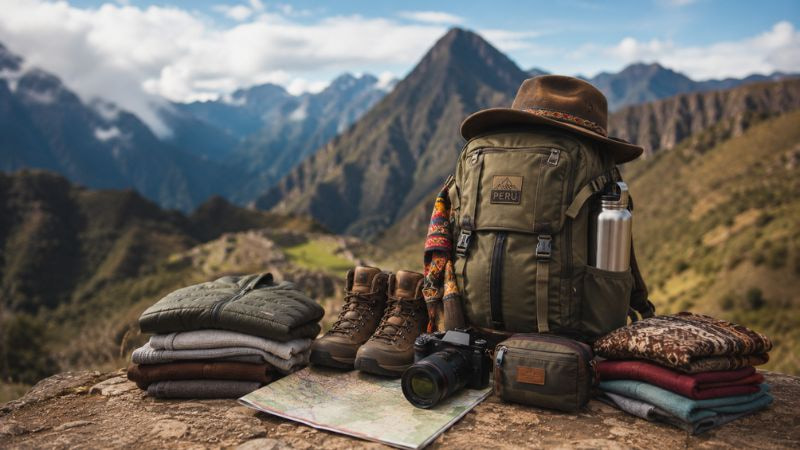
There are things that don’t show up in any official guide but make all the difference between a trip that flows and one that piles up setbacks. After years accompanying travelers through Peru, these are the ones we most want to share.
What nobody tells you about your luggage
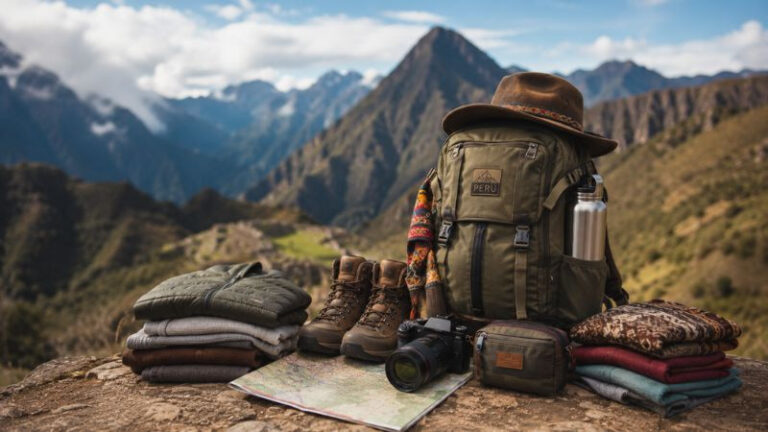
The most common mistake is arriving with a suitcase packed for a single climate. On a 12-day trip you can go from Lima’s humid heat or Cusco’s cold nights of zero degrees, to the fine drizzle of Machu Picchu. The solution isn’t to bring more clothes, it’s to bring layered clothing that can be mixed and matched.
For the highlands, the essentials are a good lightweight raincoat and footwear with good grip. Wet Inca stones are more slippery than they look in photos. In Lima, many travelers are surprised to arrive in July expecting heat and instead finding garúa, Lima’s coastal winter mist. A jacket is essential.
Peru is one of those countries where you can go from heat to cold on the same trip. The key isn’t bringing a lot, it’s bringing the best for each area:
| Zone | What to bring |
| Lima | Light clothing + jacket (the garúa lowers the perceived temperature quite a bit) |
| Cusco / Highlands | Layers. Days 15–20°C, nights 0–5°C. Always bring a lightweight raincoat |
| Machu Picchu | Technical shirt, raincoat, footwear with grip |
| Amazon | Long sleeves, repellent DEET 30% or higher |
Altitude in Cusco and how to prepare to enjoy it without surprises
Altitude sickness doesn’t discriminate by age or physical condition. Cusco sits at 3,400 meters and there’s no way to predict how it will affect you until you’re there.
The protocol is simple: rest on the first day. Plenty of water, coca tea, no alcohol. Light activity on the second day. By the third, your body is usually ready. Some travelers check with their doctor about using acetazolamide (Diamox) before traveling, since it can reduce symptoms, although it doesn’t eliminate them entirely. And tap water isn’t safe to drink anywhere in Peru, always buy bottled or purified water.
Documentation, money, and safety
Citizens of Argentina, Chile, Colombia, and Mexico can enter Peru with their national ID card. Europeans need a passport valid for at least six months. It’s a good idea to always carry a photocopy in your backpack, since there are checkpoints between regions where it may be requested.
The Peruvian sol is the official currency, although dollars are accepted at hotels and tourist restaurants. Cash is essential at markets and for local transport. Interbank, BCP, and Scotiabank ATMs are the most reliable. Always exchange currency at official exchange houses.
To get around Lima, the most recommended options are Uber, Cabify, InDrive, or taxis coordinated by your hotel. In some cities in the interior of the country these apps don’t always have drivers available, so it’s advisable to request a radio taxi service or ask your accommodation to arrange a trusted taxi. Peru is a safe destination with basic precautions: don’t display expensive equipment, wear your backpack in front in markets, and check that agencies have RNT (National Tourism Registry).
Connectivity
A local SIM card from Claro or Entel is the most practical option: they have the best coverage in the highlands, and their 30-day plans cost between 15 and 30 soles. You can also activate an eSIM with providers like Airalo or Hola Fly before leaving your country. In trekking areas and rural zones, it’s best to assume there will be no signal.
We recommend saving this table, since it summarizes everything you need to keep in mind before boarding the plane:
| Topic | Key detail |
| Clothing | Layers for the highlands, always bring a raincoat, footwear with grip |
| Altitude | Minimum 2 days of acclimatization in Cusco before intense activity |
| Water | Only bottled or purified throughout the country |
| Documentation | National ID for Mercosur and Andean Community countries, passport for the rest of the world. |
| Money | Soles + cash essential; ATMs BCP, Interbank, Scotiabank |
| Urban transport | Apps (Uber, Cabify, InDriver) or hotel taxi |
| Connectivity | SIM card Claro or Entel; no signal in trekking and rural areas |
Frequently asked questions about how to organize a trip to Peru
How far in advance do I need to book Machu Picchu tickets? Machu Picchu tickets have a limited daily quota and sell out months in advance during high season. The safest way to guarantee your entry is to book with a certified agency that handles the reservation along with the rest of the trip. Outside high season, 4 to 6 weeks is usually enough. Between June and August, it’s best to secure it 3 to 6 months in advance.
What documents do I need to enter Peru? National ID card for citizens of Mercosur and the Andean Community. Passport valid for at least 6 months for the rest of the world. No tourist visa is required for most Western nationalities.
How much does a 12-day trip to Peru cost? A 12-day trip combining Lima, Cusco, the Sacred Valley, and Machu Picchu runs between 1,200 and 2,500 USD per person with transfers, tickets, and guides included. If you’re looking for something more limited, our packages start at 489 USD per person for 4 days in Cusco, all-inclusive.
Is it safe to travel to Peru as a tourist? Yes. With basic precautions, the tourist areas of Lima, Cusco, and Machu Picchu are safe. The incidents we see are almost always avoidable: informal taxis at the airport, exchanging money on the street, unregistered agencies. Common sense is the best tool.
What should I do if I get altitude sickness in Cusco? Rest, water, and coca tea. Mild symptoms like headache and fatigue are normal during the first 24 to 48 hours. If you experience persistent nausea, difficulty breathing, or disorientation, you should see a doctor. Don’t push physical activity in the first few days: it’s the most important advice we can give you.
Organize your trip to Peru with Guru Explorers
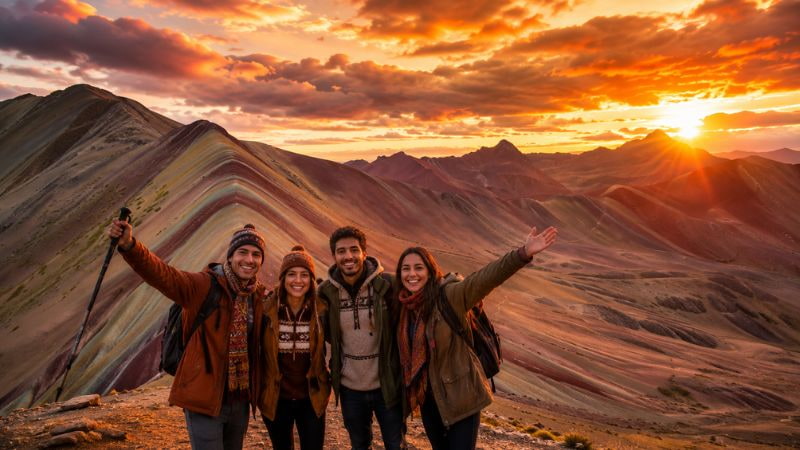
A trip to Peru has many pieces that link together: tickets that sell out months ahead, trains with limited capacity, an acclimatization process that sets the pace for everything else.
At Guru Explorers we know every destination firsthand. We know what to book first, how to coordinate logistics so everything flows smoothly, and which details make the difference between a good trip and an unforgettable experience. Our Best Tours in Peru include transfers, tickets, certified guides, and carefully selected accommodations, with the flexibility to adapt each itinerary to each traveler’s interests.
If you prefer to build your own itinerary, this guide is your starting point. And if you’d like us to take care of everything, contact us here and leave it in the hands of our experts.
Conclusion
Organizing a well-planned trip to Peru comes down to three decisions in the right order: choosing dates based on the season, securing Machu Picchu tickets in advance and building the itinerary around that backbone.
With 7-10 days, the Lima–Cusco–Sacred Valley–Machu Picchu route has everything a first trip needs: history, scenery, gastronomy, and that moment facing the citadel that no photo can fully capture.
Peru is one of those destinations that changes your priorities. And it all starts with planning it well.