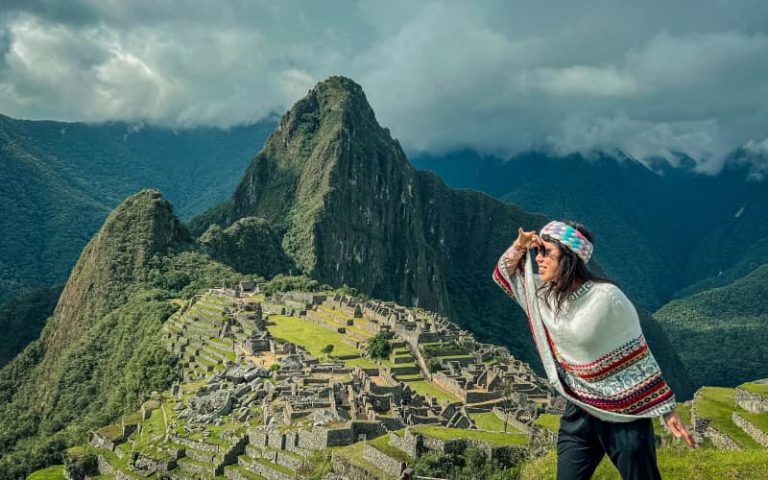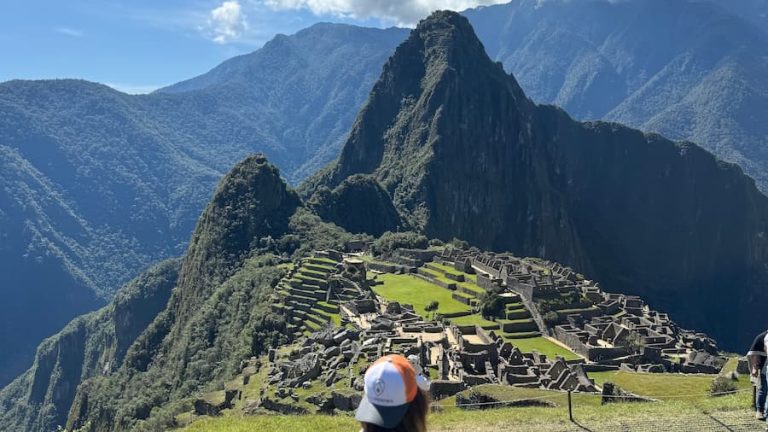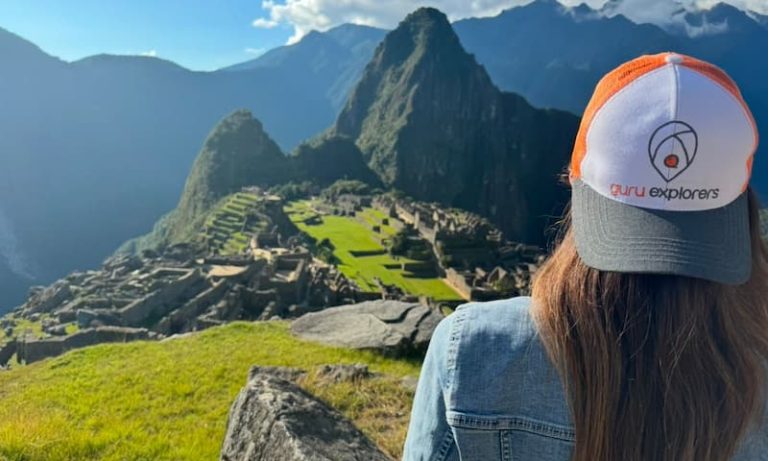
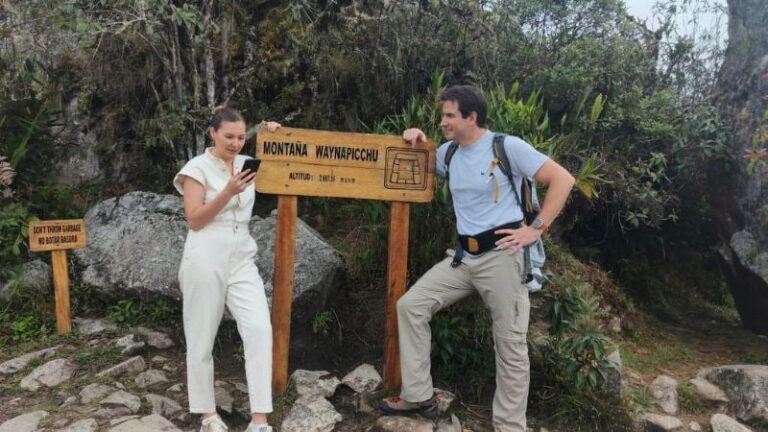
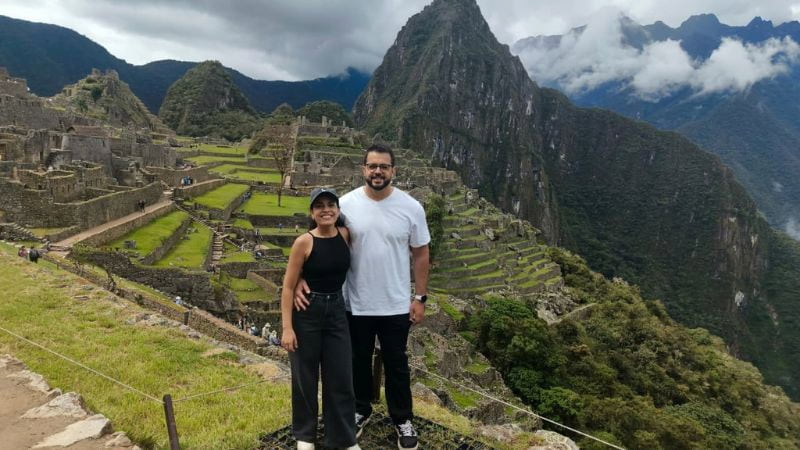
Few circuits at Machu Picchu offer as much variety as Circuit 3. With a single ticket, you can choose between a short, flat visit through the lower section of the sanctuary — ideal if you’re short on time — or a full trekking day up to Huayna Picchu, Huchuy Picchu, or the Temple of the Moon. That flexibility makes it one of the most requested options among travelers who have already visited the citadel and are coming back for something different. If you want to see how it fits within the official system, check out this guide on Machu Picchu circuits.
What Is Circuit 3 Machu Picchu and What Does It Include?
Circuit 3 of Machu Picchu, also known as the Royal Route, covers the lower section of the archaeological site — the northern strip where the temples associated with Inca nobility are concentrated. The difference from the other two circuits is clear: while Circuit 1 stays at the top for the panoramic photo and Circuit 2 combines the classic postcard shot with temples, Circuit 3 enters from below and never climbs to the Guardian’s House.
That makes it two things at once, which is what makes it special: it’s the most accessible circuit in the sanctuary and, at the same time, the only one from which you can continue on foot toward the adjacent mountains. If you want to compare different ways to explore the citadel, you can also browse our Machu Picchu Tours.
What’s Included
- Entry through the lower agricultural zone, with no steep staircases at the start.
- One-way route through the temples in the lower Hurin sector.
- Optional access to three high-altitude trails: Huayna Picchu, Huchuy Picchu, and the Temple of the Moon.
- Four internal routes to choose from (3A, 3B, 3C, and 3D), each with its own ticket.
Comparison Table: Circuit 3 vs. Other Circuits
| Aspect | Circuit 1 | Circuit 2 | Circuit 3 |
| Type of experience | Panoramic | Classic photo + temples | Lower temples + optional mountains |
| Area of the sanctuary | Upper section | Upper and middle sections | Lower zone |
| Classic postcard photo | Yes | Yes | No (alternate panoramic) |
| Mountain access | Machu Picchu Mountain only | None | Huayna Picchu, Huchuy Picchu, Temple of the Moon |
| Best for | Photography and scenery | First complete visit | Trekking, accessibility, return visits |
What to See on Circuit 3 Machu Picchu: Main Highlights
Throughout the route you’ll pass through the main enclosures of the lower zone, all accessible without uphill sections.
Lower Agricultural Zone
This is where the route begins. It’s the system of terraces and storehouses from which you get an alternate panoramic photo of the sanctuary, and one of the spots where llamas roam freely. If you want the photo, this is the moment.
Temple of the Sun (exterior view)
The most recognizable semicircular structure in the sanctuary, built directly on natural rock. On this circuit you’ll see it from the base — which actually helps you better appreciate the quality of the carved stone and the perfect fit between blocks, with no mortar required. Just below is a chamber archaeologists call the Royal Tomb.
House of the Inca
A residential compound adjacent to the Temple of the Sun. You can’t enter, but the circuit detour puts you close enough to appreciate the wall composition and the trapezoidal niches so characteristic of Inca architecture.
Temple of the Three Windows (lower view)
One of the most photographed structures at Machu Picchu, seen from below on this circuit. The three windows face east, looking directly into the Urubamba Valley — and that’s no coincidence, as you’ll discover along the way.
Sacred Rock
A large monolith at the end of the urban section, just before the checkpoint toward the mountains. Its silhouette mirrors the mountain range behind it — almost like a stone drawing of the landscape in front of you.
Temple of the Condor or Water Mirrors
Before the exit you must choose between two options: the Temple of the Condor, a stone complex shaped to reproduce a condor in flight, or the Water Mirrors, ceremonial basins carved into rock. You cannot visit both, so decide in advance. Note also that the Temple of the Condor is only open between 10:00 and 13:00.
Complementary Routes
One of the lesser-mentioned advantages of Circuit 3 is that it doesn’t end at the citadel. It’s the only one of the three circuits that connects directly to high-altitude trails toward the adjacent mountains, making it the natural starting point for those who want to go beyond the archaeological site.
Circuit 3 is the only one that links to three high-altitude trails, and the differences between each are covered in the next section. If you’re also interested in arriving at Machu Picchu on foot from the start, check out our Machu Picchu Trek Tours.
What Kind of Experience Does Circuit 3 Offer?
It’s a more relaxed visit than the other circuits. Entering from the lower section means you skip the steep staircases at the beginning, making it a strong choice for visitors with reduced mobility and for those traveling with children or elderly companions.
The route through the citadel follows a mostly flat path along terraces and stone-paved walkways, with some original stone staircases in short, low-difficulty stretches, plus the option to extend your day toward the adjacent mountains if you want more. That’s why it tends to be the choice of travelers who have already visited Machu Picchu and are returning to explore what they didn’t get to see the first time.
Circuit 3 Machu Picchu Routes: Differences and How to Choose
All four routes share the initial section through the lower temples, then diverge after the checkpoint. The difference isn’t just difficulty — each one opens a distinct symbolic layer of the sanctuary, which is what makes the choice worth thinking through.
Route Comparison Table
| Route | What It Includes | Difficulty | Availability | Minimum Age |
| 3A — Huayna Picchu | Lower temples + ascent to Huayna Picchu | High | Year-round | 18+ (12–17 with adult) |
| 3B — Designed Royalty | Lower temples only | Low | Year-round | No restriction |
| 3C — Temple of the Moon | Lower temples + Gran Caverna | High | High season only | 18+ (12–17 with adult) |
| 3D — Huchuy Picchu | Lower temples + short ascent | Medium | High season only | 18+ (12–17 with adult) |
Route Breakdown
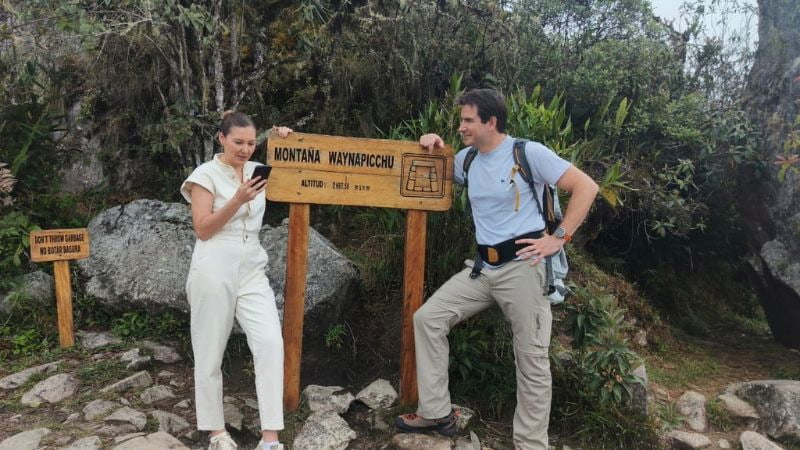
Route 3A — Huayna Picchu
Route 3A follows the same Inca Trail used by amautas (Inca sages) to reach the summit. It’s worth understanding: Huayna Picchu was not a viewpoint — it was a ritual observatory linked to the solar cycle and to Salkantay, the tutelary apu of the valley.
The terraces you’ll see at the summit functioned as offering platforms following the Andean principle of ayni — the reciprocity between the community and the land. The famous “death staircases” are dry-stone masonry that has endured six centuries of seasonal rains, a direct testament to the Inca mastery of slope engineering.
Route 3B — Designed Royalty
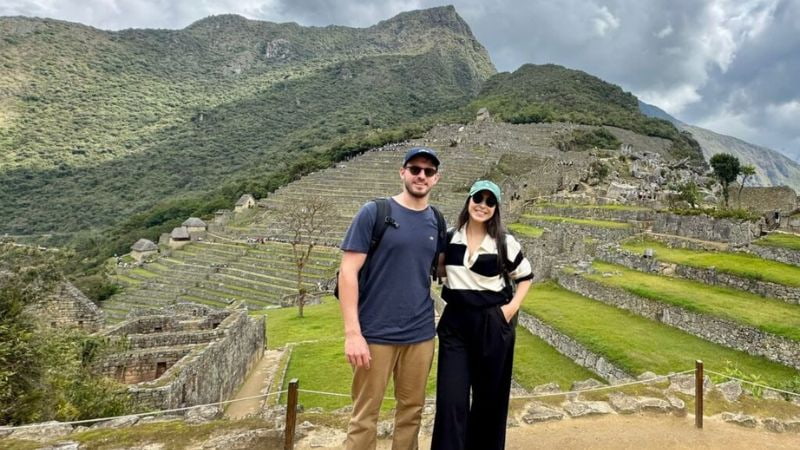
The name isn’t marketing — it has a historical basis. The Hurin sector housed the Inca’s direct nobility, and the enclosures are aligned with astronomical precision. Most remarkably, the Temple of the Sun captures the first ray of the June solstice through its east window, projecting it onto a carved stone inside.
The adjacent House of the Inca was an exclusive retreat for the sovereign during ritual periods — a clue that Machu Picchu functioned as Pachacutec’s private llaqta rather than a common city. If you look closely at the stonework in this sector, you’ll notice the cushion polygonal technique, reserved for elite temples and present in fewer than five percent of the site.
Route 3C — Temple of the Moon (Gran Caverna)
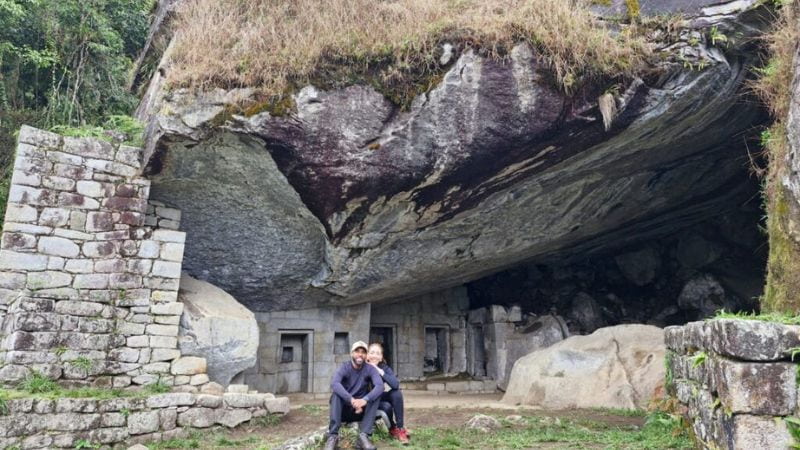
It’s the least-visited route in the sanctuary, which already makes it special. The Temple of the Moon sits on the north face of Huayna Picchu, inside a natural cavern that the Incas refined with fine stonework.
Its function was not astronomical but funerary and initiatory: the space simulated the uku pacha — the underworld in Andean cosmology — associated with ancestors and cycles of regeneration. The trapezoidal niches carved into the rock would have held mallquis (venerated bodies) or representations of local huacas.
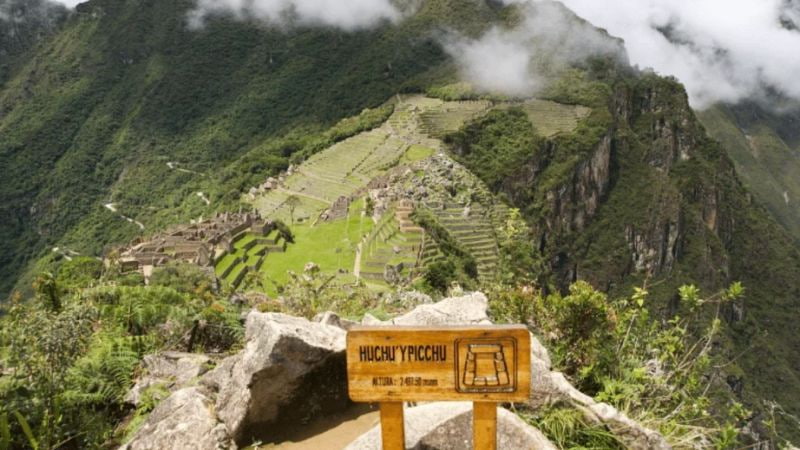
Route 3D — Huchuy Picchu
It’s the “little sibling” of Huayna Picchu, and the name makes sense. Huchuy literally means “small” in Quechua, in contrast to Huayna (“young”) and Machu (“old”) — three sister mountains that form a complete symbolic system.
The terraces on its slope weren’t built for agricultural productivity (the climate made them marginal), but to reinforce the idea of chacana, the Andean cross that organizes space into four quadrants. In a sense, each mountain in the Huayna–Huchuy–Machu Picchu axis operates as a vertex of a ritual triangle.
How to Choose the Best Route for Your Profile
- With family, elderly travelers, or limited mobility → choose 3B.
- Looking for the most demanding trek and a panoramic view from above → choose 3A.
- Interested in the least-traveled path and visiting during high season → choose 3C.
- Want moderate trekking without committing the full day → choose 3D.
- Arriving after a prior trek like Salkantay or the Inca Trail → 3B is the natural close.
Key Practical Tips Before You Visit
- Book 4–6 months in advance for June through August, especially for 3A and 3C, which have limited daily slots.
- High season runs June 19 – November 2; routes 3C and 3D are only sold during this period.
- Buy tickets early — daily quotas regularly sell out on the day they open.
- Bring footwear with good grip and a waterproof layer, especially December through March.
- Backtracking is not allowed once you’ve started the circuit — decide your route before purchasing your ticket.
Plan Your Visit with Guru Explorers
Circuit 3 is probably the most flexible option at Machu Picchu — it covers everything from the sanctuary’s most accessible visit to the most demanding trek you can do within the citadel. Each ticket is independent and cannot be changed once purchased, so it’s worth defining your physical condition, travel season, and primary interest (archaeological, photographic, or hiking) before choosing.
At Guru Explorers we handle the full itinerary — ticket, official guide, transport, and accommodation — so you don’t have to worry about the logistics. Browse our Machu Picchu Tours or, if you prefer to arrive on foot, our Machu Picchu Trek Tours.